Impacted Canine Treatment
An impacted canine is one of the most common dental problems we treat. The canine, or eyetooth, plays a critical role in your bite and dental arch alignment.
At Lake Country Oral & Maxillofacial Surgery in Pewaukee, our board-certified surgeons work alongside your orthodontist to bring impacted canines into their correct position.
What Is an Impacted Canine Tooth?
An impacted tooth is one that is stuck and cannot erupt into function on its own. Wisdom teeth are the most common impacted teeth, but they are typically removed. The upper canine (maxillary cuspid) is the second most commonly impacted tooth. Unlike wisdom teeth, the canine is essential, and every effort is made to preserve it.
The Role of the Canine Tooth
Canine teeth have the longest roots of any tooth in the human mouth. They are designed to be the first teeth to contact when the jaws close together. This helps guide the entire bite and tooth alignment.
Where Impacted Canines Are Found
About 60 percent of impacted upper canines are located on the palate, or roof of the mouth. The remaining cases may be found in the middle of the supporting bone above adjacent roots or toward the facial side of the dental arch.
Why Treat Impacted Canines Early?
Canines normally erupt around age 13, closing any remaining gaps in the front teeth. When a canine is impacted, treatment is planned to help guide it into the proper position in the dental arch.
Common Signs of an Impacted Canine
Many impacted canines are detected during routine orthodontic evaluation or X-rays.
A baby canine tooth that has not fallen out by age 13 or 14
No adult canine visible in the mouth by the mid-teen years
A gap or misalignment in the upper front teeth
A visible bulge on the roof of the mouth or along the gum line
Crowding or shifting of surrounding teeth
Surgical Exposure and Eruption Techniques
The goal of treatment is to bring the canine into its correct position in the dental arch. This is achieved through a coordinated approach between the oral surgery team and your orthodontist.
Step 1: Orthodontic Preparation
Braces are typically placed before surgery to create space for the canine to move into.
Step 2: Surgical Exposure
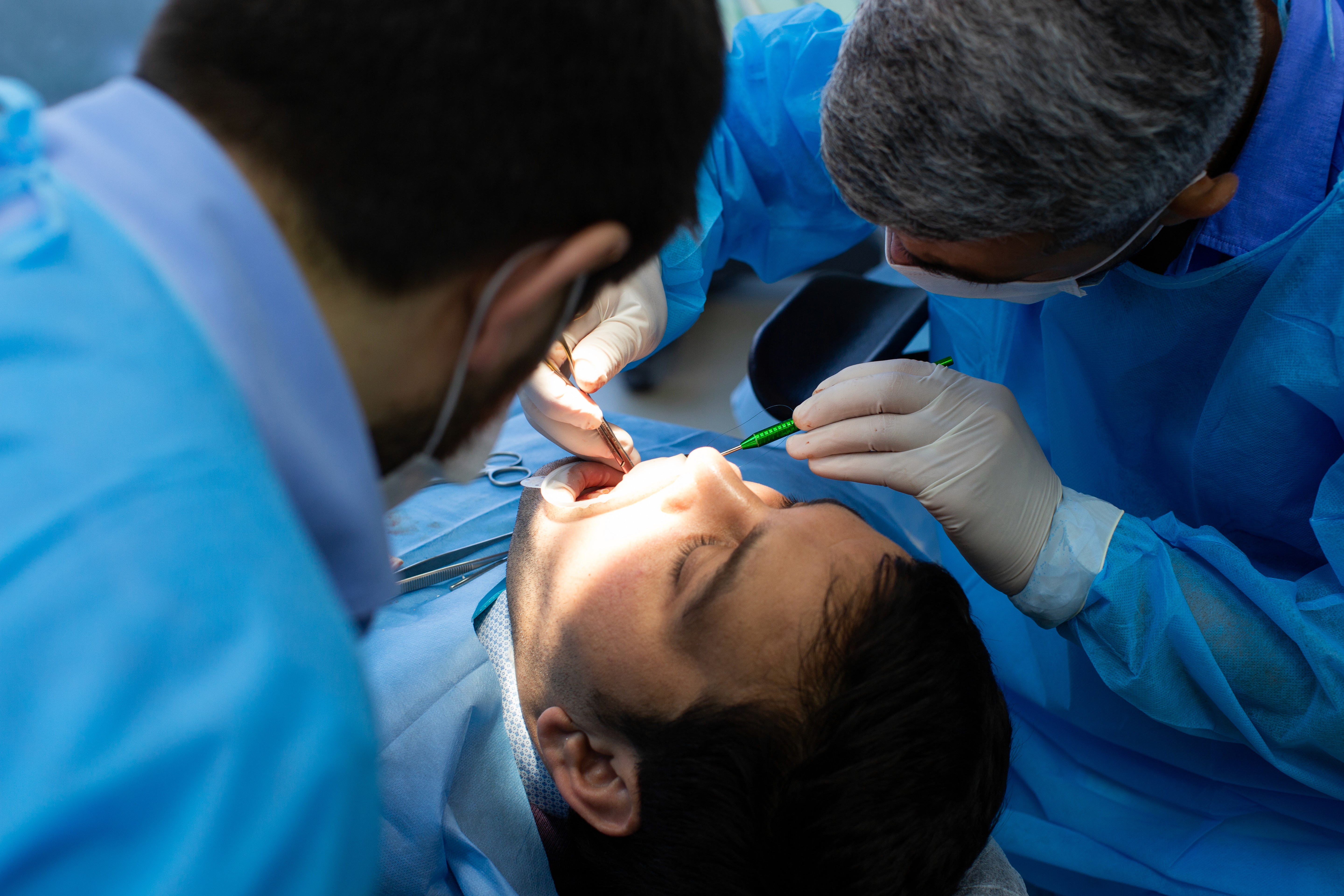
The surgeon lifts the gum tissue to expose the impacted tooth. A small orthodontic bracket may be bonded directly to the exposed tooth surface.
Step 3: Guided Eruption
After healing, your orthodontist uses gentle tension over time to guide the tooth into proper alignment.
Techniques Apply to Other Impacted Teeth Too
These exposure and eruption techniques are not limited to upper canines. They can also be applied to other impacted teeth in the upper or lower jaw.
Recovery After Impacted Canine Surgery
Recovery from canine exposure surgery is generally mild and manageable. Most patients return to normal activities within a few days.
Pain and Swelling
Begin pain medication before the local anesthetic wears off. Tylenol or ibuprofen may be used as directed after surgery. Apply ice to the cheek as much as possible for the first 36 hours.
Protecting the Site
Do not disturb the wound or any surgical packing that was placed.
If packing falls out, contact the office for instructions.
Do not probe or touch the bracket with your tongue or fingers.
Avoid straws, spitting, and vigorous rinsing for the first 24 hours.
Keep physical activity to a minimum.
Diet and Oral Hygiene
Drink plenty of fluids and avoid hot liquids on the day of surgery. Stick to soft foods initially, and return to a normal diet as soon as you are comfortable. Brush normally when possible, avoiding direct contact with the surgical site. Rinse with warm saltwater as directed.
FAQs About Impacted Canine Surgery
What makes the canine tooth so important?
Canine teeth have the longest roots of any tooth in the mouth. They are the first teeth to contact when the jaws close, helping guide the bite and overall alignment.
At what age should an impacted canine be treated?
Upper canines normally erupt around age 13. Evaluation is often recommended when eruption has not occurred as expected.
How long does the full treatment take?
Treatment time varies. Orthodontic preparation, healing after surgery, and guided eruption each take time depending on the individual case.
Is the procedure done under sedation?
Sedation options may be available depending on the procedure and treatment plan.
What if the canine does not respond to guided eruption?
Treatment progress is monitored over time, and the plan may be adjusted if needed.
Does my child need both an oral surgeon and an orthodontist?
Yes. Successful treatment typically involves coordination between both specialties.